Choosing mangoes for a family involves more than comparing the word organic on a label. You need to understand the nutritional value, distinguish certified organic fruit from naturally ripened or loosely described produce, and know how to buy, ripen, wash and store mangoes safely. By the end, you can compare sellers and varieties with a practical checklist.
Key takeaways
- Check the grower, certification details and traceability before buying organic mangoes.
- Organic and naturally ripened describe different practices; neither claim proves the other.
- Choose mango varieties by texture, fibre, sweetness and how your family will eat them.
- Wash mangoes under running water, then refrigerate cut fruit promptly.
What organic mango benefits can add to a family diet
A serving of sliced mango supplies carbohydrate for energy, fibre for a more filling snack, and vitamin C for normal immune function and collagen formation. Its yellow-orange carotenoids, including beta-carotene, support vitamin A intake, although the amount varies by variety and ripeness.
Mango is also about 80% water, so it contributes to fluid intake without replacing plain water.
| Nutrient | Useful contribution | What not to assume |
|---|---|---|
| Fibre | Supports fullness and regular bowel function | It does not cancel out the fruit’s natural sugar |
| Vitamin C | Helps meet daily vitamin C needs | It does not prevent every infection |
| Carotenoids | Add provitamin A compounds to the diet | More colour does not guarantee a medical benefit |
| Water and carbohydrate | Provide hydration and quick energy | Mango is not a low-calorie food in unlimited portions |
For most families, pair mango with curd, unsweetened yoghurt, nuts or a meal containing vegetables and protein. A whole fruit or a measured bowl of pieces works better than mango juice, which removes much of the fibre and makes large portions easy to drink.
The main organic mango benefits relate to production standards, not a guaranteed vitamin increase. Organic certification restricts specified synthetic inputs; it does not make the fruit “chemical-free,” and it does not prove that organic mangoes contain more nutrients than conventionally grown ones.
These organic fruit benefits fit a balanced diet, but they do not turn mango into a treatment or a substitute for variety.
Organic, naturally ripened and chemical-free are not the same claim
An organic mango label guarantees a production standard, not a mango free of every chemical. Organic farming can use permitted pesticides, fertilisers and biological-control products, while every mango contains naturally occurring chemicals.
| Claim | What it means | What it does not guarantee |
|---|---|---|
| Organic | Produced under a recognised organic standard that restricts specified synthetic inputs | Zero pesticide residue or chemical-free mangoes |
| Naturally ripened | Ripened on the tree or without specified post-harvest ripening agents; ask which | Organic farming or superior nutrition |
| Chemical-free | A vague, technically inaccurate marketing phrase | That no permitted input or natural chemical was present |
| Conventionally grown | Produced outside an organic certification system | Unsafe fruit or artificial ripening |
In Bengaluru, check the pack, crate or invoice for the Jaivik Bharat logo, the seller’s name, certification details, or Participatory Guarantee System India details where applicable. Also ask for the batch or lot number and a traceability record linking that lot to the farm or packhouse.
Treat ripening as a separate question. A certified organic mango could still have unclear post-harvest handling if the seller cannot explain when it was harvested and how it was ripened. Ask directly: “Was any ripening agent used after harvest?” A confident “organic” answer does not answer that question.
Reject a label that offers only “chemical-free” without a certifier, producer identity, lot information or records you can check.
How to buy and inspect organic mangoes in Bengaluru
A mango with unbroken skin can still be overripe inside. Buy from a seller who can identify the farm, harvest date, and lot rather than relying on the word “organic” alone.
Farm-direct sellers can offer harvest and transport details; certified organic shops provide a fixed retail point; farmers’ markets let you inspect fruit before paying. Grocery delivery is convenient but gives you less control over selection, while community-supported agriculture arrangements suit families willing to accept the season’s available varieties.
| Channel | What to check | Main trade-off |
|---|---|---|
| Farm-direct seller | Harvest date, farm name, packing method, replacement policy | Better traceability, less choice of individual fruit |
| Organic shop | Jaivik Bharat logo, certificate details, seller and lot information | Easier comparison, possibly older stock |
| Farmers’ market | Seller identity, certification or PGS-India details, visible fruit condition | Inspect in person, limited availability |
| Delivery service or CSA | Product photos, lot details, delivery date, refund terms | Convenient, but inspection happens after purchase |
Ask for the Jaivik Bharat logo and the certification name or Participatory Guarantee System India details where applicable. Also request the batch or lot number and a traceability record. Organic certification restricts specified inputs; it does not prove that the mango was naturally ripened or free from post-harvest treatment.
Check each fruit before accepting it:
- Choose firm fruit that yields slightly under gentle thumb pressure.
- Smell the stem end; a fresh, sweet aroma is preferable to a sour or alcoholic smell.
- Reject mangoes with leaking juice, mould, deep bruises, split skin, or shrivelling.
- Ignore colour alone; green skin does not prove immaturity, and yellow skin does not prove quality.
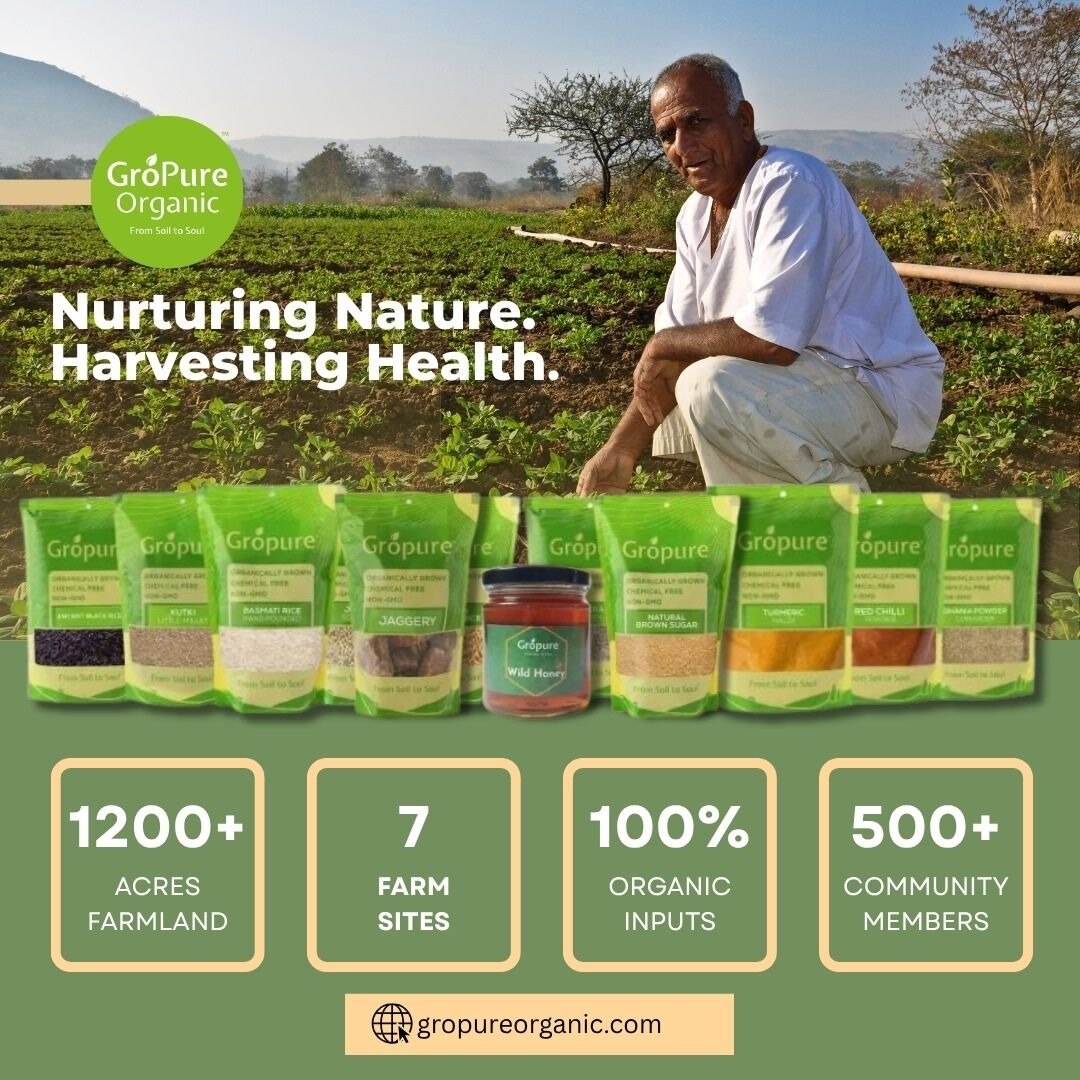
These checks help you capture the benefits of organic mangoes in Bengaluru without confusing a sound fruit with a verified organic claim. A farm-development business such as GroPure Organic Farm is not automatically the mango seller, so confirm who harvested and packed the specific lot.
Choose the mango variety for the way your family will eat it
Fibre, sweetness and firmness should match how your family will eat the fruit. Choose smooth, sweet, soft flesh for breakfast, desserts and children; choose firmer mangoes with some acidity for slicing into lunch boxes, salads or chutney.
| Variety | Fibre and flavour | Best household use |
|---|---|---|
| Alphonso | Very low fibre, intensely sweet, soft when ripe | Eating plain, aamras and desserts |
| Banganapalli | Low fibre, sweet, firm flesh | Slices, lunch boxes and fruit bowls |
| Kesar | Low fibre, sweet and aromatic, soft when ripe | Eating plain, shakes and purée |
| Totapuri | Firmer, mildly sweet-tart, more fibrous near the seed | Salads, chutney, pickle and cooking |
A fibrous mango is not spoiled; its strands simply make spoon-eating less pleasant. Reserve it for blending, cooking or eating around the seed, and choose a low-fibre variety for young children or anyone who dislikes stringy texture.
Firmness controls timing as much as texture. A firm mango travels better and gives you a longer eating window, while a soft ripe one delivers richer flavour but needs prompt use. Do not judge sweetness from firmness alone: taste a sample or ask the seller about the variety and expected ripeness.
The organic mango benefits remain part of a balanced diet whichever variety you choose; variety changes convenience and enjoyment, not the basic need to pair mango with meals that also provide protein, vegetables and other fruits.
Ripen, wash and store mangoes safely at home
Do not wash mangoes on arrival if you plan to keep them for several days: trapped moisture encourages surface mould. Check each fruit, discard any split, leaking or mouldy one, and keep bruised fruit separate for prompt use.
1. Ripen firm mangoes at room temperature in a ventilated bowl, away from direct sun. A paper bag can speed ripening; do not seal fruit in an airtight plastic bag. Test daily: a ripe mango gives slightly near the stem and smells fruity.
2. Wash only the mango you will cut. Hold it under clean running water and rub the skin, even if you will peel it; organic certification limits specified farm inputs but does not make the skin germ-free. Dry with a clean towel.
3. Cut on a clean board with a clean knife, then serve promptly. Refrigerate peeled or cut mango in a covered container within two hours, or within one hour if the room is above 32°C, and eat it within three to four days.
Safe handling helps your family enjoy organic fruit benefits without turning ripe produce into a food-safety problem. Do not give a cut mango that smells fermented, feels slimy or shows mould; cutting around mould is not a safe rescue.
Frequently asked questions
What are the benefits of organic mangoes for Bengaluru families?
Mangoes provide carbohydrate, fibre, vitamin C and carotenoids including beta-carotene. Organic production changes how the fruit is grown, not its basic nutrients.
Are organic, naturally ripened and chemical-free mangoes the same?
No. Organic refers to production standards, naturally ripened refers to the ripening process, and chemical-free is an imprecise marketing claim. Ask the seller to define each claim.
How can you buy organic mangoes in Bengaluru?
Ask who grew the mangoes, what organic certification or verification supports the claim, and whether the seller can provide batch or farm traceability. Inspect fruit for bruising, leakage, mould and an intact surface.
How should you ripen, wash and store mangoes at home?
Ripen firm mangoes at room temperature away from direct sun. Wash the whole fruit under running water before cutting, refrigerate cut mango in a covered container, and discard fruit with mould or fermentation odour.