Finding a nearby seller is not enough: you also need to compare cleaning, processing, storage, certification, delivery terms and traceability. By the end, you will know where to shop, which questions to ask, how to read the pack, and how to store your purchase safely at home.
Key takeaways
- Compare stores, markets, farm-direct sellers and delivery services before buying.
- Choose pulses by cooking time, texture and the dishes you prepare.
- Check Jaivik Bharat, NPOP or PGS-India details before trusting an organic claim.
- Reject damaged packs and store grains in airtight containers away from heat.
Where can you buy organic grains and pulses near Bengaluru?
You can buy organic grains and pulses near Bengaluru from organic stores, farmers’ markets, farm-direct sellers, community-supported agriculture groups and online delivery services. Each option trades price against freshness, convenience and traceability.
| Option | Price and freshness | Delivery, packaging and traceability |
|---|---|---|
| Organic store | Convenient; price includes retail handling; turnover determines freshness | Immediate purchase, packaged goods, visible labels; ask for the farm or production district |
| Farmers’ market | Fresh lots and direct contact; prices vary by season | Usually no delivery or small minimum order; loose produce needs careful lot and packaging checks |
| Farm-direct seller | Small lots can cost more after cleaning and transport | Limited delivery area and higher minimum orders; strongest traceability only when records are available |
| CSA group | Planned seasonal supply and shared logistics | Fixed pickup or delivery schedule, reusable or bulk packaging; crop choice and quantity may be limited |
| Online service | Easiest repeat ordering; compare delivered prices carefully | Wider delivery area and sealed packs; minimum order, delivery fee and aggregator traceability vary |
A Bengaluru address does not prove local origin. Ragi, tur, green gram, black gram and horse gram may come from other Karnataka districts, so compare the same cleaned weight, crop, grade and delivery cost.
Ask the seller for:
- Farm or production district and harvest season
- Lot number
- Cleaning location and milling location
- Net cleaned weight and packing date
Whole lots are easier to trace than split pulses or milled ragi flour. For organic grains in Bengaluru, treat a clear paper trail as more valuable than a nearby shopfront.
Which organic pulses suit everyday Bengaluru cooking?
Toor dal, moong dal, urad dal, chana dal and masoor dal suit frequent Bengaluru meals because they work in sambar, khichdi, dosa, idli and dal. Rajma, chickpeas, cowpea and horse gram suit pressure-cooked curries, salads and sundal but need more soaking and cooking time.
| Form | Cooking and use | Buying trade-off |
|---|---|---|
| Whole | Longer soaking; rajma, chickpeas, cowpea, horse gram | Clearer lot identity, fewer exposed surfaces and usually longer keeping quality |
| Split | Faster cooking; toor dal, moong dal, chana dal | Convenient, but inspect for dampness, insects and breakage |
| Skinned or dehulled | Smooth dals, dosa and quick-cooking dishes | Less visible grain identity and more surface exposed |
| Milled | Flour, batter or specialty mixes | Maximum convenience, but the original lot is hardest to trace |
For anyone searching to buy organic pulses in Bengaluru, compare the intended dish, cooking time and cleaned weight rather than the label or price alone. Check pack size against your consumption so stock does not age in the pantry.
Whole pulses should be intact, dry and free of webbing or unusual odour; split pulses deserve closer inspection because cracks and moisture spread faster.
The phrase chemical free pulses near Bengaluru needs clarification. Ask whether the seller means certified organic, in-conversion, residue-tested or simply grown without a stated input, and request the lot number, farm or district and harvest season.
How should you choose organic grains and their processing level?
Choose the least processed form that suits your dish. Whole grains retain clearer lot identity and usually keep longer; milling, rolling and flaking improve convenience but expose more surface area to moisture, insects and post-harvest mixing.
| Form | Best use | Main trade-off |
|---|---|---|
| Whole ragi, millet or wheat | Fresh milling, soaking or cooking | More traceable; requires equipment or longer cooking |
| Polished rice | Soft, quick-cooking rice dishes | Less bran; ask whether it is fully polished |
| Semi-polished rice | Everyday rice with more texture | Slower cooking; confirm the degree of polishing |
| Rolled or flaked oats | Porridge, upma and baking | Ask whether the seller or an outside mill processed them |
| Cracked grain | Porridge, khichdi and pilaf | Faster cooking; check for stale or damp pieces |
| Flour or ragi malt | Dosa, roti, porridge or drinks | Shorter shelf life and weaker lot traceability |
For organic grains in Bengaluru, ask whether ragi was sold whole, milled into flour or made into malt. Ask who cleaned or milled wheat and oats, where that work occurred, and whether lots stayed segregated.
- Check the harvest season, lot number and milling date.
- Choose flour for immediate use; choose whole grain for longer storage.
- Reject a seller who cannot explain processing for organic grains and pulses near Bengaluru.
How do you verify an organic or chemical-free claim?
Start with the pack: look for the India Organic logo or Jaivik Bharat logo, plus certification details linked to NPOP or PGS-India. A credible label also identifies:
- FSSAI licence number
- Packer or processor name
- Batch or lot number
- Packing date
- Net quantity and maximum retail price
- Customer-care phone number, email or address
Use the seller’s exact wording as a test. Chemical free pulses near Bengaluru is not a certification category: “chemical-free”, “pesticide-free”, “natural” and “organic” are not interchangeable legal claims.
| Claim | What it means | Evidence to request |
|---|---|---|
| Certified organic | Production and handling follow an approved organic system | Current NPOP or PGS-India certification details |
| In-conversion | The farm is moving from conventional production | Conversion status and certification records |
| Residue-tested | A sample was tested for specified residues | Laboratory report with sample, date and batch identity |
| Chemical-free or natural | A seller’s description, not proof of organic certification | Written definition, input records and production records |
Ask which claim the seller means before you buy organic pulses in Bengaluru. Request the certificate, residue report or production records, not a verbal assurance.
Conversion matters: under NPOP, annual and biennial crops require a two-year conversion period, while perennial crops require three years, subject to certification. Also ask how the lot stayed separate during cleaning, milling, transport and storage; shared equipment or bins can break traceability after harvest.
What should you check before accepting the pack, and how should you store it?
At delivery, inspect organic grains in Bengaluru before signing or storing the pack. Organic certification controls production and handling standards; it does not prevent storage pests, mould, or damage during transport.
- Reject the pack if the seal is broken, the bag is torn, or you find holes, webbing, live insects, moisture, clumping, or excessive breakage.
- Smell the contents through an opened pack when possible. Rancid, sour, or musty odours indicate deterioration; do not accept the food.
- Treat the phrase chemical free pulses near Bengaluru as a prompt to ask what claim is meant. Certification does not guarantee pest-free storage, and “chemical-free” is not the same as certified organic.
- At home, transfer sound grains and pulses into clean, dry, airtight containers. Keep them away from sunlight, heat, sinks, and damp cupboards.
- Write the purchase date on each container and use older stock first. Refrigerate or freeze newly purchased stock when you suspect pantry pests, or when you will not use it for several months.
- Discard damp or mouldy food. Do not rinse, sun-dry, or cook it to salvage the affected batch.
When is farm-direct buying worth the extra effort?
Direct buying is worth the extra effort when traceability, a specific harvest, or a regular supply matters more than the lowest headline price. Small lots can cost more after cleaning, packing and delivery; an audited aggregator can improve testing, storage and consistency.
| Option | Strength | Trade-off |
|---|---|---|
| Farm-direct | Better visibility of farm, harvest and lot | Higher minimum order, delivery cost or variable cleaning |
| Managed farm source | Farm oversight with organised records | Verify who processes and delivers the product |
| Audited aggregator | Better testing, storage and consistent cleaned weight | Less visibility of the individual farm |
Ask the seller:
- Which farm or district produced it, and in which harvest season?
- Who cleaned, milled and packed it?
- Can you see the lot number, input records and segregated-storage records?
- What is the minimum order, and is delivery charged separately?
For people searching for organic grains and pulses near Bengaluru, proximity does not prove local origin. If you want to buy organic pulses in Bengaluru, compare the same crop, grade and cleaned weight against the full delivered price.
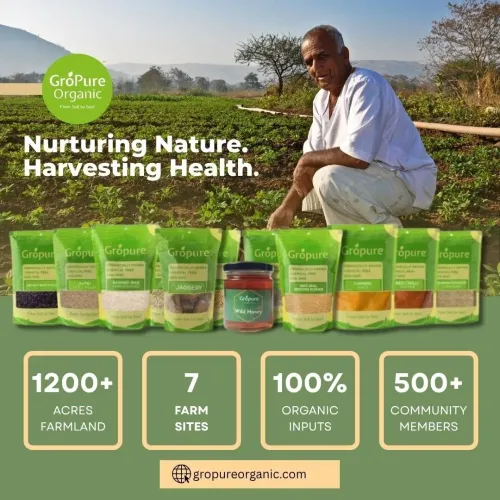
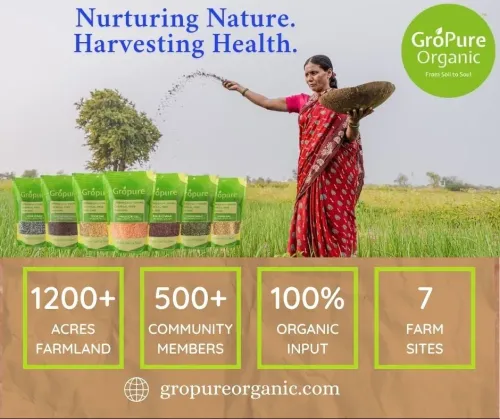
GroPure Organic Farm is one managed source to evaluate with these evidence and delivery questions, not by the farm-direct label alone.
Frequently asked questions
Where can you buy organic grains and pulses near Bengaluru?
Compare organic stores, farmers’ markets, farm-direct sellers, community-supported agriculture groups and online delivery services. Check the seller’s delivery area, harvest or packing date, minimum order and return policy.
Which organic pulses suit everyday Bengaluru cooking?
Toor dal suits sambar and dal, moong dal cooks quickly, urad dal supports idli and dosa batter, chana dal works in stews and snacks, and whole beans add texture. Buy smaller quantities when testing a new seller.
How do you verify an organic or chemical-free claim?
Look for the Jaivik Bharat logo and an NPOP or PGS-India certification reference. Ask for the certification number, product scope and batch details; treat chemical-free as an unverified marketing claim unless the seller provides traceable evidence.
What should you check before accepting and storing the pack?
Check the seal, batch number, net weight, packing date, FSSAI licence details and signs of insects or moisture. Transfer dry grains and pulses to clean airtight containers, label the date and keep them cool, dry and dark.