The right way to use a turmeric powder in cooking is different from preparing an Ayurvedic herb, decoction or concentrated extract. By the end, you will know which form to choose, how to prepare and store it safely, and how to check whether a Bengaluru product is genuinely certified and traceable.
Key takeaways
- Use culinary spices in measured food quantities, not improvised medicinal doses.
- Choose whole spices for longer freshness and grind them as needed.
- Prepare herbs according to their form: food, tea, decoction, oil or supplement.
- Check batch details, storage conditions and supplier records before buying.
Choose the right form: culinary spice, Ayurvedic herb or extract
Turmeric, cumin, coriander, black pepper, cardamom, cinnamon, cloves, ginger and fenugreek are primarily culinary spices. Use measured amounts in everyday food for flavour, not improvised medicinal doses. Buying organic spices and ayurvedic herbs in bengaluru does not change that distinction.
| Form | Use | What to check |
|---|---|---|
| Food spice | Cooking | Pack says food-grade; use measured culinary amounts |
| Dried Ayurvedic herb | Tea or decoction | Ingredient and botanical name, plant part, and label directions |
| Herbal oil | External application | Use on skin or hair unless the label explicitly says it is edible |
| Extract, tablet or supplement | Concentrated intake | Ingredient name, botanical name, extraction ratio, serving size and usage directions |
A dried herb is not equivalent to an extract: a tablet or supplement can deliver a much higher dose. A common name does not prove Ayurvedic identity because related plants can share regional names; require the botanical name and traceable labelling.
Do not improvise doses during pregnancy, for children, liver or kidney disease, before surgery, or while taking anticoagulants or diabetes medicines. Ask a qualified Ayurvedic practitioner or doctor to guide medicinal use. Organic certification describes the production system; it does not prove botanical identity, therapeutic effectiveness, purity or safety.
Use whole spices and powders without losing flavour or freshness
Dry-roast cumin, coriander and fenugreek briefly over low to medium heat until aromatic, then cool them fully before grinding. Grinding while hot traps steam and can make the powder stale or lumpy.
- Add turmeric powder with oil or other ingredients during cooking; dropping it into a smoking-hot dry pan can scorch its flavour and darken the powder.
- Crush black pepper just before use, when its aroma is strongest.
- Add cardamom seeds or lightly crushed pods to rice or tea.
- Simmer a small piece of cinnamon or one or two cloves in a pot, then remove them before serving.
- Grate fresh ginger near the end of cooking, or simmer sliced ginger in the dish for a gentler flavour.
Whole spices retain aroma longer and are easier to inspect. Powders save time but lose volatile oils faster, and their colour or filler is harder to detect.
| Form | Advantage | Best everyday use |
|---|---|---|
| Whole spices | Longer-lasting aroma; visible condition | Pepper, cardamom, cinnamon and cloves |
| Powders | Faster and easier to measure | Turmeric or a freshly ground roasted blend |
Roasting improves flavour, not safety: it is not a sterilisation step and will not remove aflatoxins, mould or all microbial contamination. Store roasted spices and powders in clean, completely dry, airtight containers away from heat, sunlight, steam and the sink.
If you search buy organic spices bangalore, reject packs with damp clumps, insects, mould or a stale smell.
Prepare Ayurvedic herbs as food, tea, decoction, oil or supplement
The form printed on the pack controls preparation. A search for organic ayurvedic herbs near bengaluru does not make every leaf, root or powder suitable for drinking.
1. Use edible leaves or culinary rhizomes in food only when the pack identifies them as food-grade. Follow the stated quantity and cooking instructions. A medicinal herb is not automatically a cooking ingredient.
2. For a simple infusion, place the measured dried herb in a cup, pour over freshly boiled water, cover, and steep for 5 to 10 minutes before straining. Use cooler water when the label directs it for delicate leaves. Do not guess the dose from the herb’s common name.
3. Prepare a decoction only when the label or a qualified practitioner specifies it. Tough bark, roots and seeds may require simmering, but the herb quantity, water volume, reduction volume and simmering time vary by product. Do not boil powders, herbal oils or tablets unless the instructions explicitly say to do so.
4. Treat herbal oil as an external-use product unless its label explicitly identifies it as edible. Take extracts, capsules, tablets and other supplements only at the stated serving size; never substitute a concentrated extract for a dried herb.
Keep the botanical name, batch details and preparation instructions with the container, especially when several products look alike. Stop and seek professional advice if the label omits the plant identity or intended form.
Store spices and herbs, and reject poor-quality material
Store dried spices and herbs in an airtight, opaque container away from the stove, sink, sunlight and steam. Label each container with the purchase date, and keep every batch separate so a problem can be traced and discarded without losing newer stock.
Use a clean, completely dry grinder. Never return a damp spoon to the jar; moisture encourages mould and clumping. Reject material showing any of these signs:
- Mould or moisture clumps
- Webbing, live insects or insect holes
- A stale, musty or rancid smell
- Colour that bleeds unusually strongly into water
Turmeric and chilli powders with unnaturally vivid colour deserve extra scrutiny because added colour is a known quality concern. A home water test cannot prove purity, so do not treat it as laboratory evidence.
Ask for a laboratory report when the herb is for medicinal use or the product carries higher contamination risk. Request checks for moisture, microbial contamination, aflatoxins, pesticide residues and heavy metals, with the report linked to the same batch you are buying.
Organic certification covers the production system; laboratory testing addresses the sampled lot. Neither confirms correct botanical identification, therapeutic effectiveness or safety. That distinction matters when a seller promotes chemical free herbs in Bengaluru: certification and testing answer different questions, while correct identification prevents you from storing or consuming the wrong plant.
Verify the Bengaluru source before you buy or invest
A trustworthy pack of organic spices and Ayurvedic herbs in Bengaluru lets you trace its contents to a named operator and a specific lot; a vague “buy organic spices Bangalore” claim does not.
1. Inspect every pack for the Jaivik Bharat mark, NPOP or PGS-India identification, certification or licence number, complete ingredient list, and the herb’s botanical name. NPOP is India’s formal certification framework; PGS-India is a group-based peer-guarantee system.
2. Record the batch or lot number, packing date, expiry or best-before date, processor and seller name, full address, and contact details. Reject a loose packet advertised as “chemical free herbs in Bengaluru” when it offers no producer identity or traceability.
3. Ask what “natural” or “chemical-free” means: certified organic, grown without synthetic pesticides, or tested for residues. Certification checks the production system; a laboratory report checks the sampled lot. For medicinal use, request a recent report linked to that lot.
4. Treat a blend as organic only under the principal organic-claim rule: products with 95% or more certified organic ingredients qualify, subject to the rules. One organic ingredient does not make an herbal tea or spice blend organic.
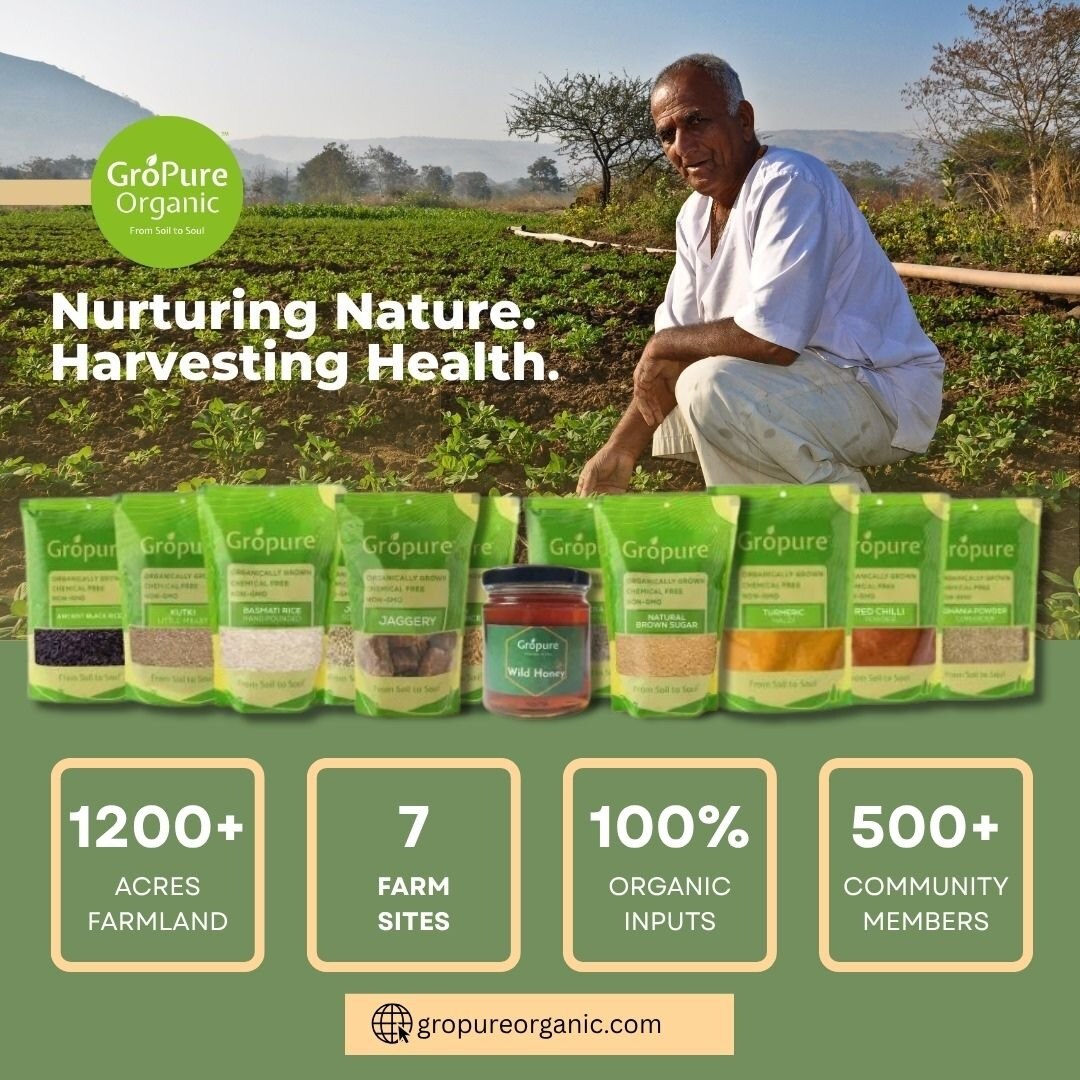
For organic ayurvedic herbs near Bengaluru, ask GroPure Organic Farm about its certification system, conversion status, water plan, drying controls, botanical records, batch segregation, and lot-linked test reports.
Confirm whether the crop has completed the two-year annual-crop or three-year perennial transition, then assess seasonal Bengaluru water supply and buyer requirements before treating medicinal herbs as an investment.
Frequently asked questions
How do I choose between a culinary spice, Ayurvedic herb and extract?
Use turmeric, cumin, coriander, pepper and similar ingredients as culinary spices in food. Choose an Ayurvedic herb preparation or extract only when its intended use, dose and preparation instructions are clear.
Are whole spices fresher than spice powders?
Whole spices usually retain aroma longer because less surface area is exposed to air. Grind small amounts as needed and keep powders tightly sealed.
How can I prepare Ayurvedic herbs?
Use the preparation stated for the product: food, tea, decoction, oil or supplement. Do not substitute a concentrated extract for a culinary amount.
What should I check before buying organic spices or herbs in Bengaluru?
Check the batch number, packed date, ingredient list, seal, storage conditions and available test or certification records. Reject material with moisture, insects, mould or a stale smell.